The saucer is the planter.
Podia
- Industrial design
- 3D printing
- Dindie object
- Two parts
What it is.
- Two parts, no hardware
- Printed to the ceiling
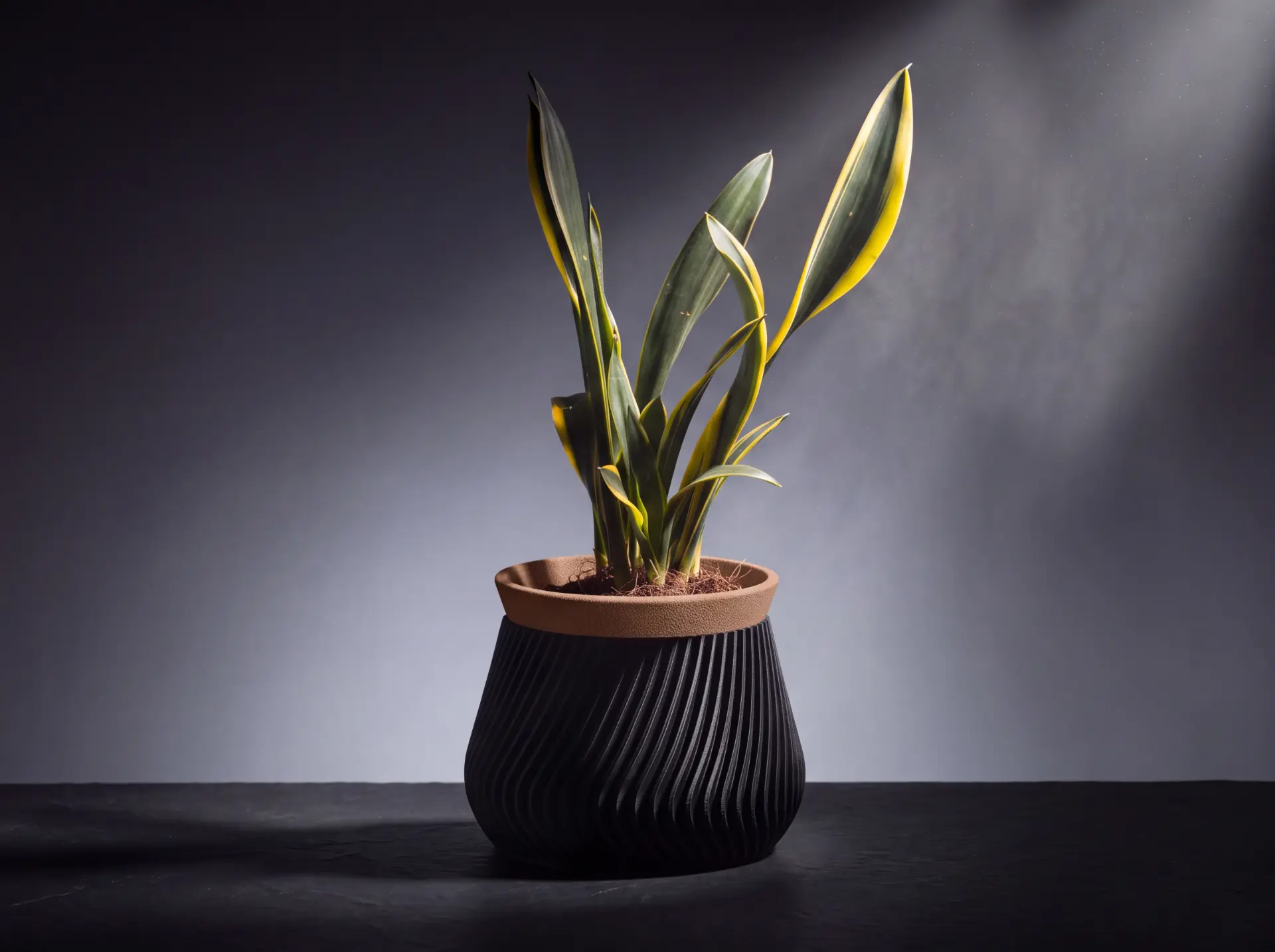
Most planters solve holding the plant and defer what happens to the water, so you improvise with a kitchen plate that was never meant to be there. Podia inverts the hierarchy.
The sculptural ridged body lets water evaporate slowly between its ridges, and the container sits inside it, restrained, so it never competes. The part doing the visual work is the part usually hidden under the pot.
Two parts, no hardware.
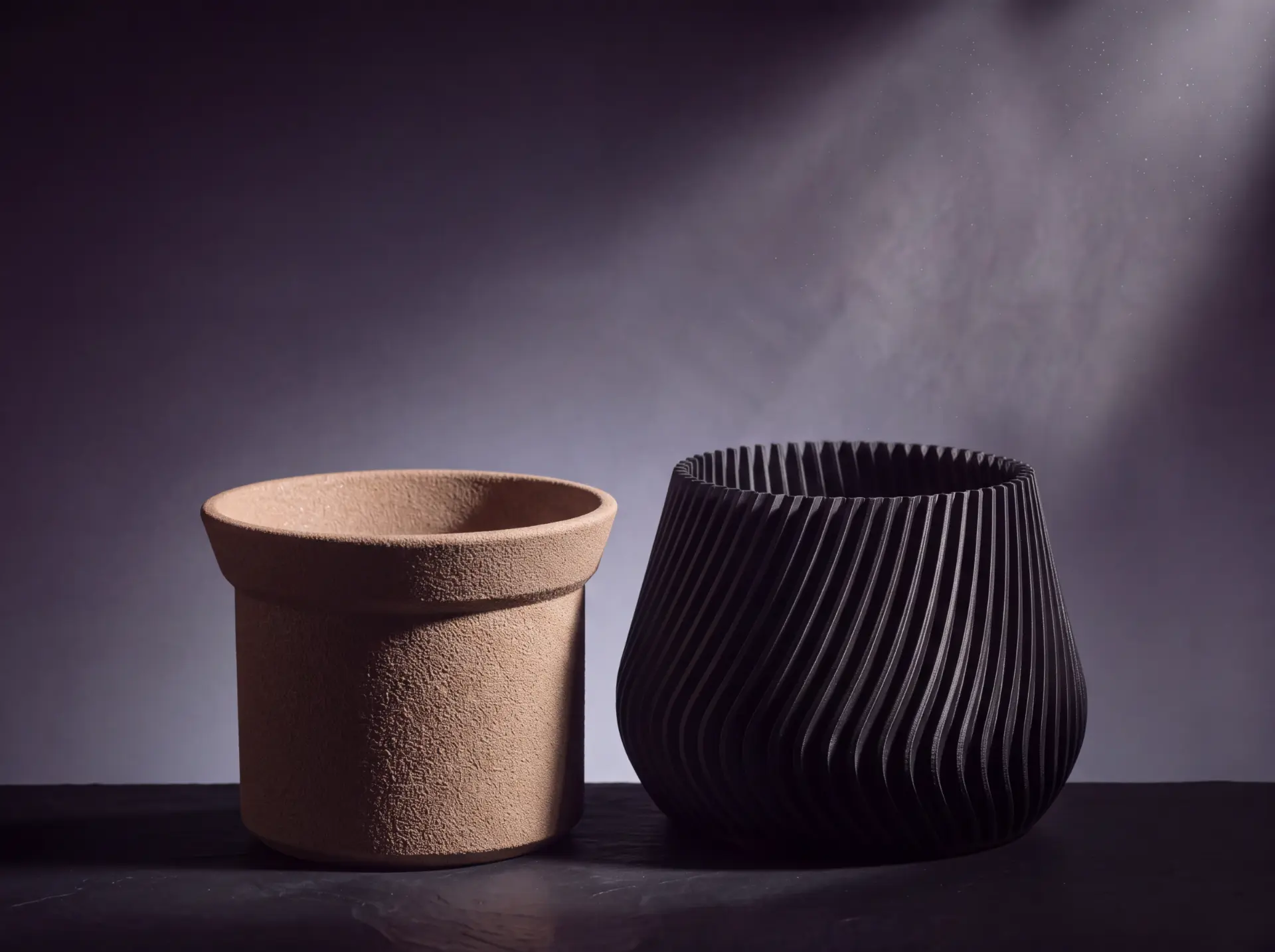
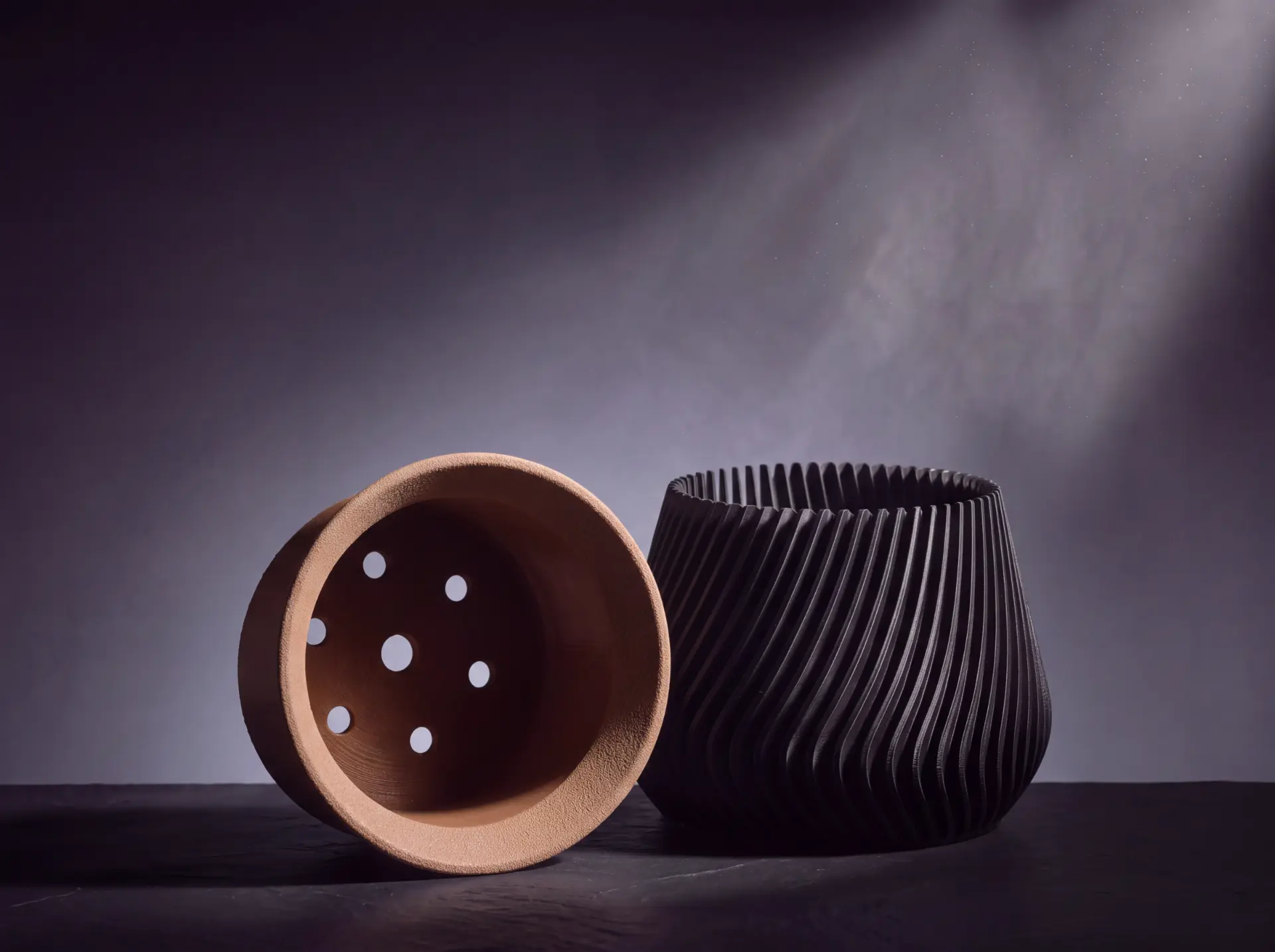
The inner container is a plain textured cylinder with drainage holes in its base. It is the functional half and it looks like it: matte, sandy, unremarkable on purpose.
The outer body carries every decision anyone will notice: the twisted ridges, the taper, the dark matte finish. Nothing fastens the two together. The inner pot drops in and the mouth of the outer body holds it.
Printed to the ceiling.
Both parts are sized against what fits in a print chamber, which is the real constraint on a Dindie object. The maximum printable volume is the module, and the object is composed inside it.
Splitting it in two is what makes that work. Each half prints within the ceiling, ships compact and is replaceable on its own, and the ridges come straight out of the process rather than being applied to it.
- 01Design the part that is usually hidden, and let the functional part stay plain.
- 02Split an object so each piece fits the printer's ceiling instead of scaling the design down.
- 03When two parts locate by geometry, you remove every fastener from the bill of materials.
 Dindie