How I designed a checkout flow for multi-stakeholder enterprise purchasing, while maintaining a white-glove experience.
- Product Strategy
- Self-Serve Growth
- Checkout
The problem.
Every enterprise deal at Envato ran through the same flow: full contract, full negotiation, full manual process, no matter what the customer actually needed. Nobody had ever applied any product thinking to it, it existed because enterprise deals had always worked that way. On top of that, whoever held the credit card almost never was the person who'd actually use the product. Making the cardholder set up the account made no sense, and making the end user handle payment made even less. Whatever we changed, the goal was to keep Standard customers feeling like Enterprise customers, not like they'd quietly been downgraded into a self-serve product.
What I found.
- The bet
- The result
Mapping the flow as a service blueprint surfaced something specific. Enterprise Standard did come with a contract, but that contract didn't include redlining as one of its terms, no negotiable clauses, no back-and-forth with legal on either side. An entire segment of customers was being pushed through weeks of authorization and budget approval for a negotiation that was never going to happen. On the payment side, routing every subscription through a manual accounting entry just so the cardholder could pay was costing roughly 20% of that subscription's value in overhead.
The bet.
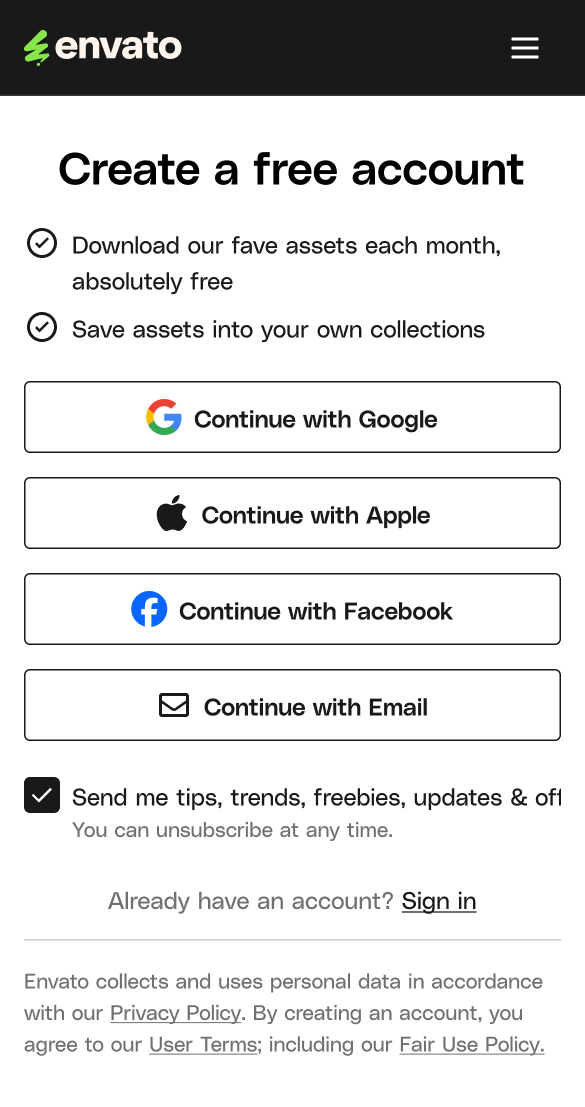
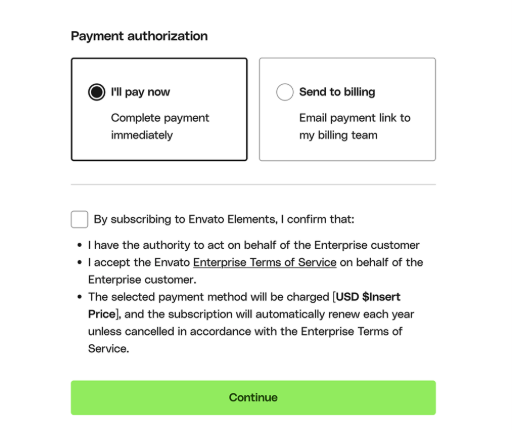
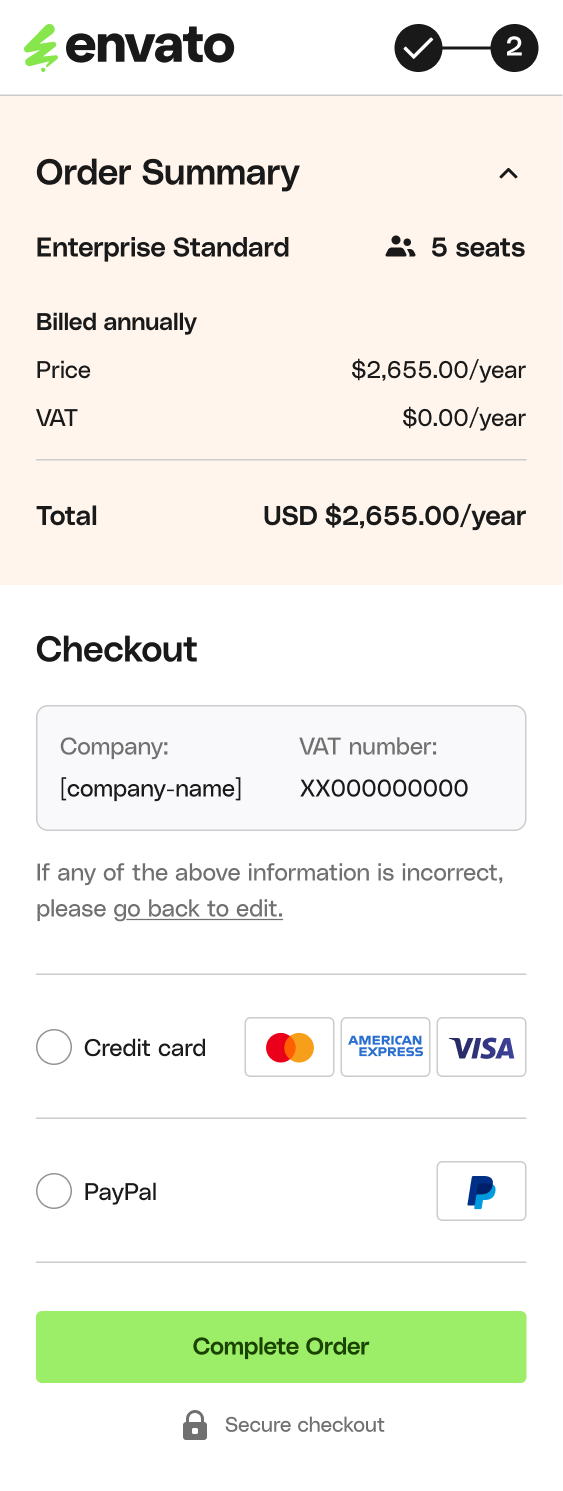
None of the front end changed. Customers still filled out the same inquiry form, still talked to a real person on the sales team, still went through the same qualification and curation that made Envato's enterprise sales feel high-touch. Once someone was confirmed as a fit for Enterprise Standard, they went straight into a new checkout link, skipping the contract and signature step entirely. The terms moved into a custom set accepted as part of checkout.
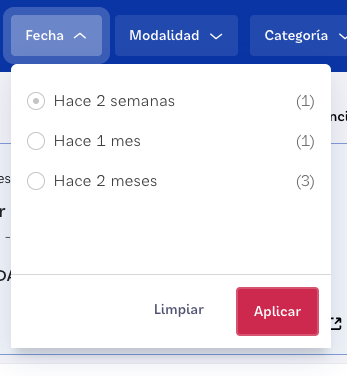
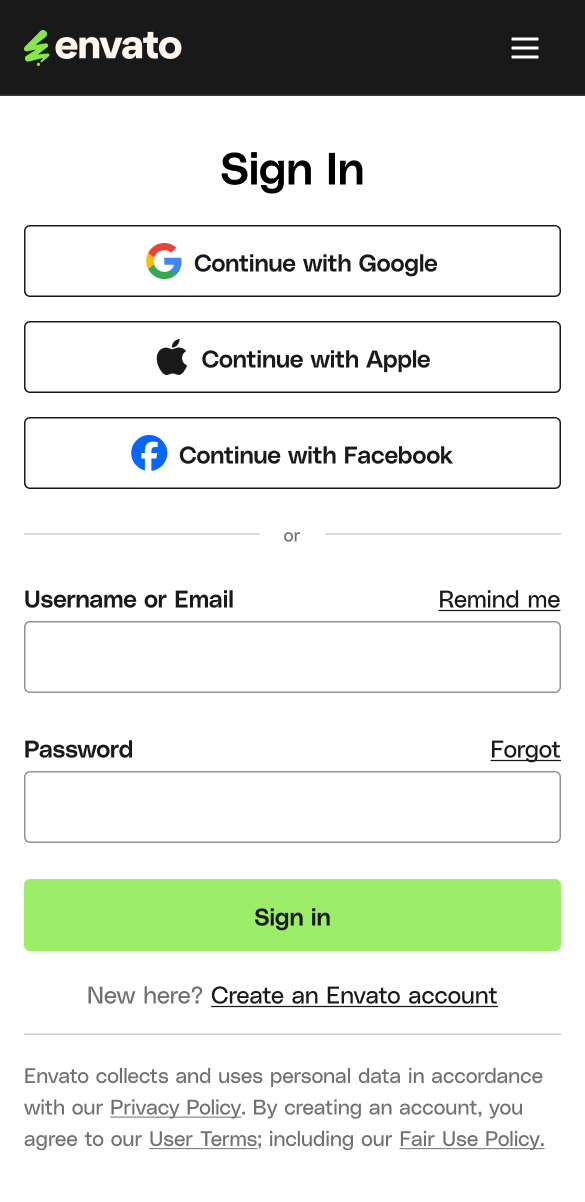
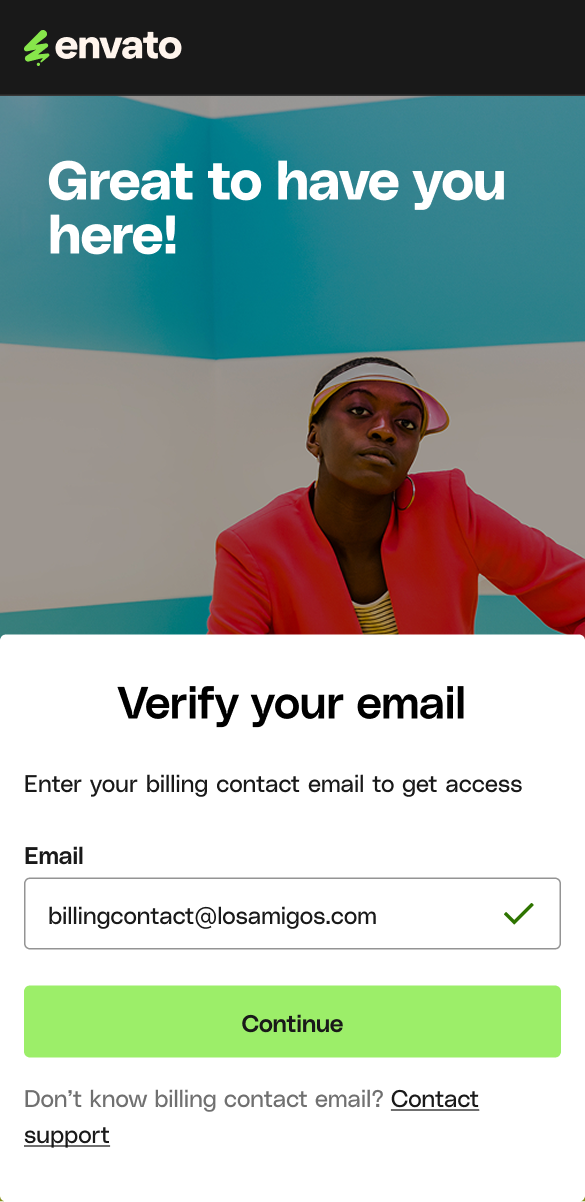
The flow also let whoever was setting up the account nominate a billing contact instead of forcing them to pay personally. Two checks kept that nomination honest. First, the nominated email had to match the organization's domain. Then a shareable link was generated, and on opening it the contact had to enter exactly the email that had been nominated. Either path fed into the same outcome. Payment processed, and the account activated automatically, no SDR required to manually flip it on or resend a payment link. The white glove part never left, it just stopped being tied to a slow back end.
The result.
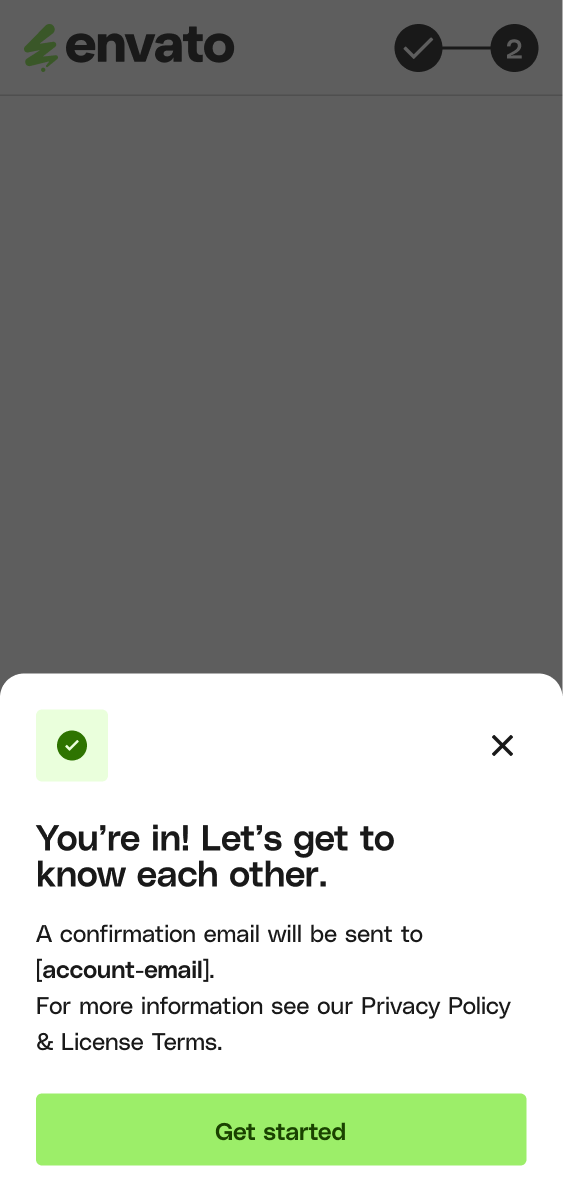
Enterprise activation time fell from 57 to 33 days, a 42% reduction, and manual sales workload dropped 40%. The old flow needed a signed contract, a manually sent payment link, someone checking whether payment had landed, and an SDR manually activating the account. The new one collapsed all of that into nominate a billing contact, pay, activate, with no human required to push it through the last mile.


- 01If your activation flow still has a human manually checking whether payment landed and flipping a switch, that's a bottleneck wearing a process costume.
- 02Let the person setting something up delegate the parts they can't or shouldn't do themselves.
 Envato