Delete the key.
Cadillac Dextera, GM Human Machine Interaction competition
- Human Machine Interaction
- Team of five
- 13 universities worldwide
The brief.
General Motors called the program Human Machine Interaction: how a person and a car deal with each other, and how that could be made better. The target was a future Cadillac, which meant designing against technology that did not exist yet but plausibly would.
Thirteen universities worldwide competed, among them Art Center, Brigham Young, Howard and the University of Cincinnati. Tec de Monterrey entered two teams. Ours was five people: four industrial designers plus one mechatronics engineer: Agustín de la O, David Zedán, Julio Valenzuela, Alfonso González and Fernando Ávila. I was in my eighth semester.
Judging ran over five teleconference presentations to General Motors' design team in Detroit. The last went directly to Ed Welburn, then GM's Vice President of Global Design.
The scope covered the human/machine interface, the key interaction components, the interior design, the interface graphic design and animated operation sequences.
The idea.
A car cannot know who you are. A thing you wear already does.
Every other answer to personalizing a cabin started inside the car. We started outside it, and by deleting something. Dextera, Latin for the right hand, was a concept that deleted the remote key entirely.
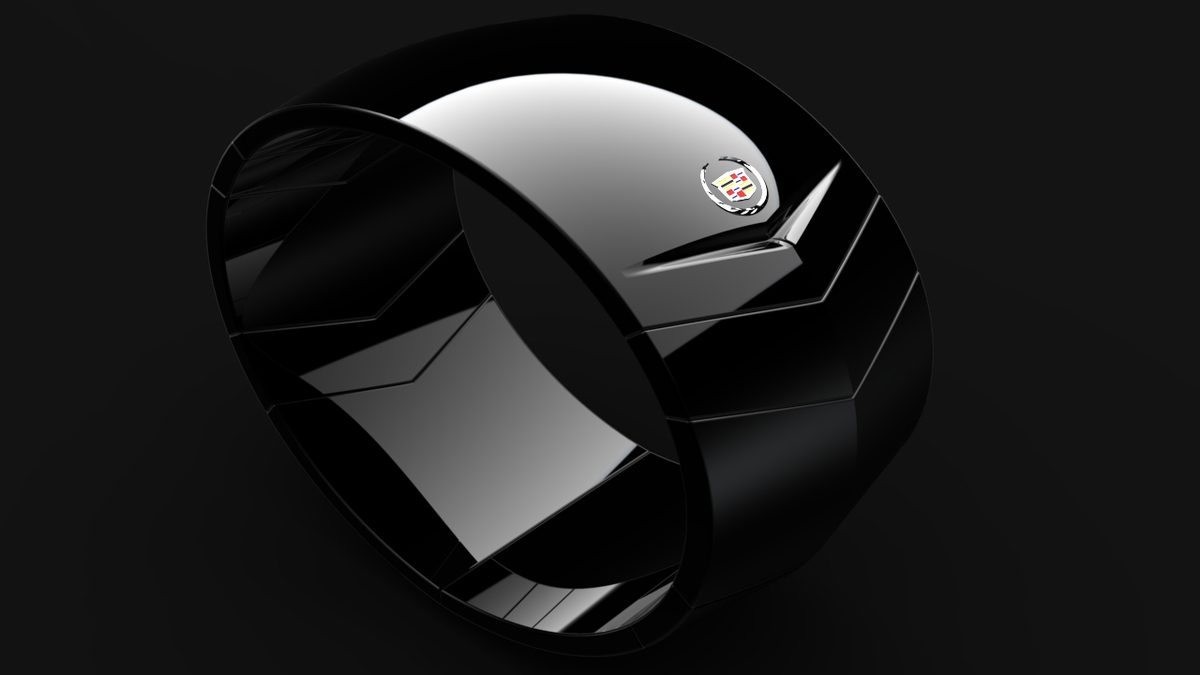
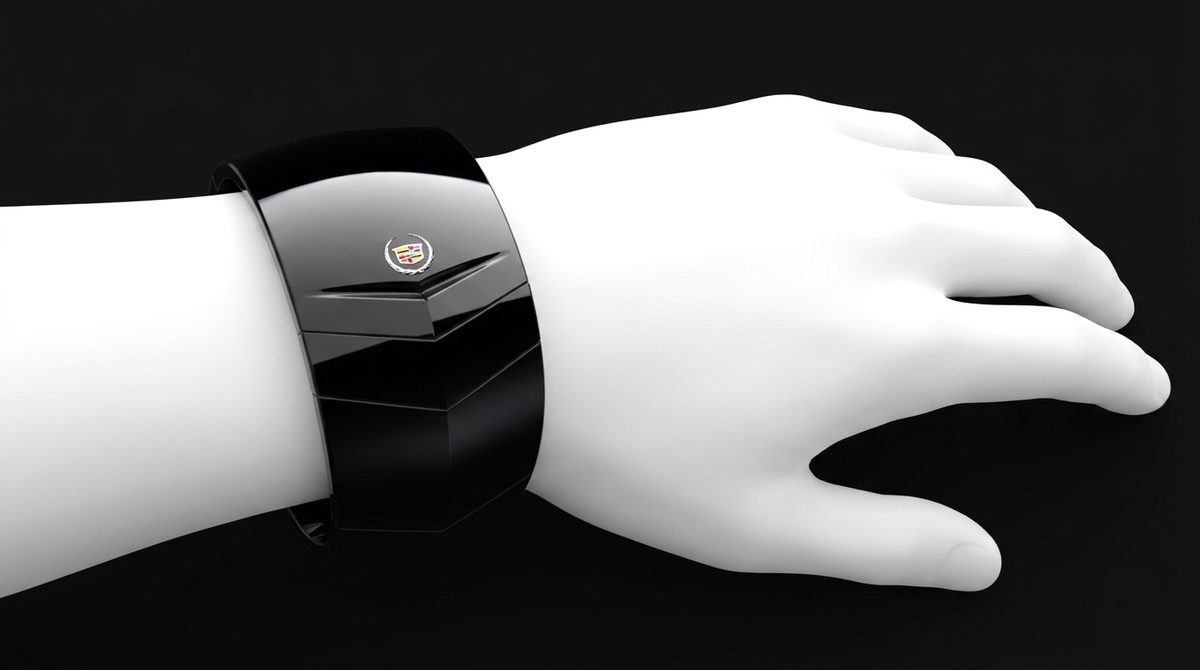
The bracelet was designed to carry motion sensors. The concept proposed that it open the doors, start the car and operate it from several meters away, move data and music on and off the vehicle, hold each driver's cabin preferences and work as a calendar the navigation system could read. The proposed cabin added windshield information projection, voice recognition and touch-sensitive controls on the wheel and console.
Telekinesis.
- One screen, two positions
The brief we were actually working to was telekinesis. Sylar moving things with a flick of the hand. Jedi. Goku. Not gesture control as a feature to list, but that specific pleasure, taken literally.
The vocabulary was small: windows down, doors open, engine on. Three gestures, three states, nothing abstract. The fantasy of power was the starting point. Build the object that delivers the feeling, then find out what it is good for.
If the power belongs to the person, the device has no reason to have an interface. No screen, no buttons, nothing to read or aim at. A band and a crest, because the thing doing the work is the hand it sits on.
One screen, two positions.
The proposal was built on three themes named on the board: Control, Entertainment and Social Interaction.
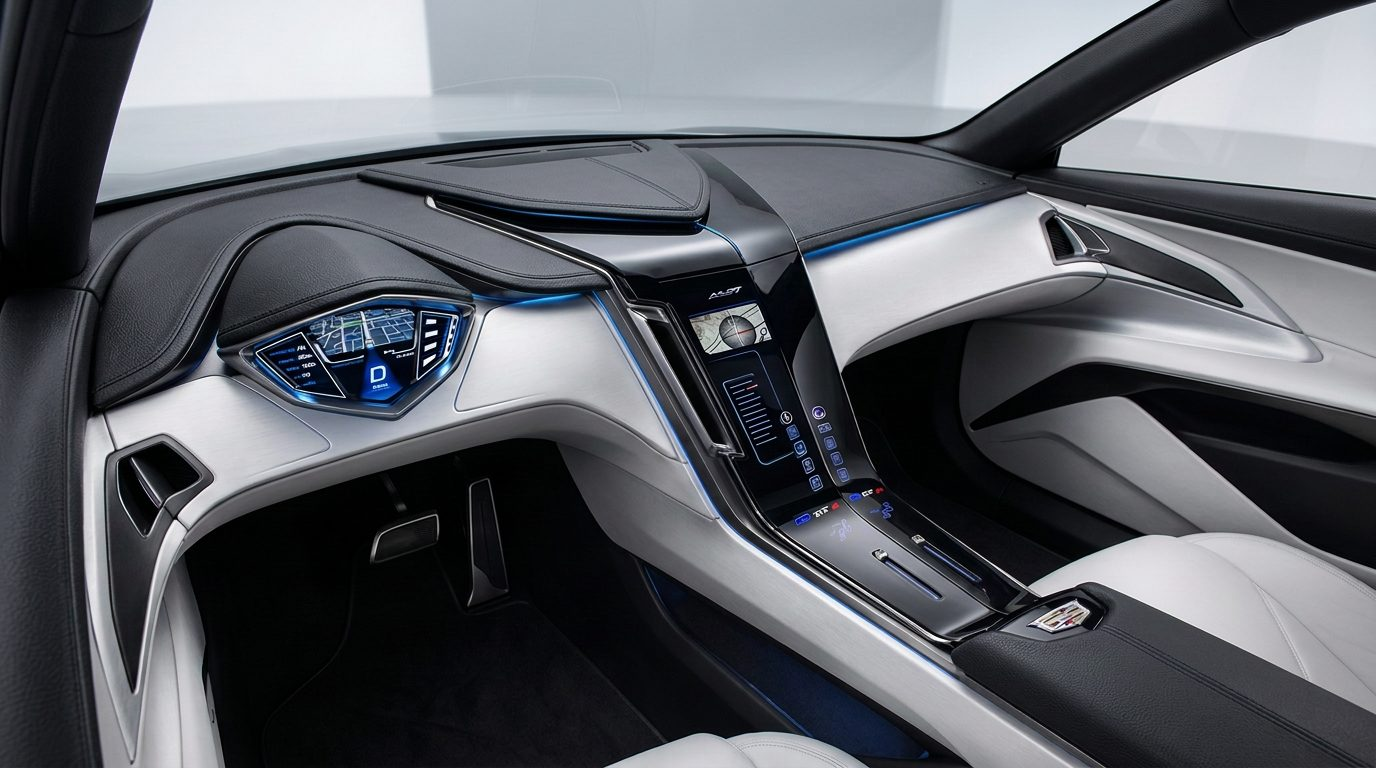
The chromed centre stack was not trim around a display. It was the display. Icons moved anywhere along it. Its angle gave driver and passenger separate usable viewing positions on one continuous screen.
The interior retained real switches and a physical dial for controls used without looking. The cluster combined propulsion and fuel information with traction, slope, warnings and a central arrow whose shape showed the direction and severity of the coming curve.
What happened.
The animations demonstrated the intended interaction: the interface greeting the driver by name. The head-up display reads 'Welcome David', after teammate David Zedán. In the concept the car does not ask who is driving; cabin temperature, music and the next calendar route follow from that recognition.
Dextera won Best Concept. Five categories were awarded; the other Tec team took Best Overall Presentation with 'Cadillac Control', so both winning teams came from the same campus.
The prize was a fund to Tec de Monterrey for each participant's further specialization, plus a scholarship toward a master's degree, which is what paid for the Master in Product Innovation that later produced my Kansei Engineering research.
El Norte and Periódico Mural, Grupo Reforma, ran the story. DiCYT covered it with both teams interviewed.
What the concept proposed was the combination: wearable identity, the driver's preferences carried on the body, and gesture control.
- 01Design from the feeling first when the emotional outcome is the real brief.
- 02When a system cannot recognise a person, give the person something that already knows them.
- 03Keep physical controls where hands need to find them without looking.
 General Motors