Is it content scarcity or just a discovery problem?
The benefits of resurfacing old content for new users.
- Product Design
- Personalization
- Engagement and Retention

The problem.
- What I found
This came up constantly in surveys and user interviews. People kept saying some version of the same thing: not enough mockups with people of color, not enough content of people doing a specific sport, not enough of whatever niche they actually needed. It read like a real gap, and a believable one, niche categories are always going to have less volume than the big ones. The instinct was to build more.
What I found.
We already had the content, 55,000 templates in the catalog at the time. What we didn't have was a steady stream of new content feeding the specific niches people kept asking about, and the older templates we'd already built up sat buried under everything published more recently. Scarcity and bad discoverability look identical from the outside, both read as 'there's nothing here.' Only one of those actually gets fixed by adding more, and we'd assumed we had that one.
The bet.
- The result
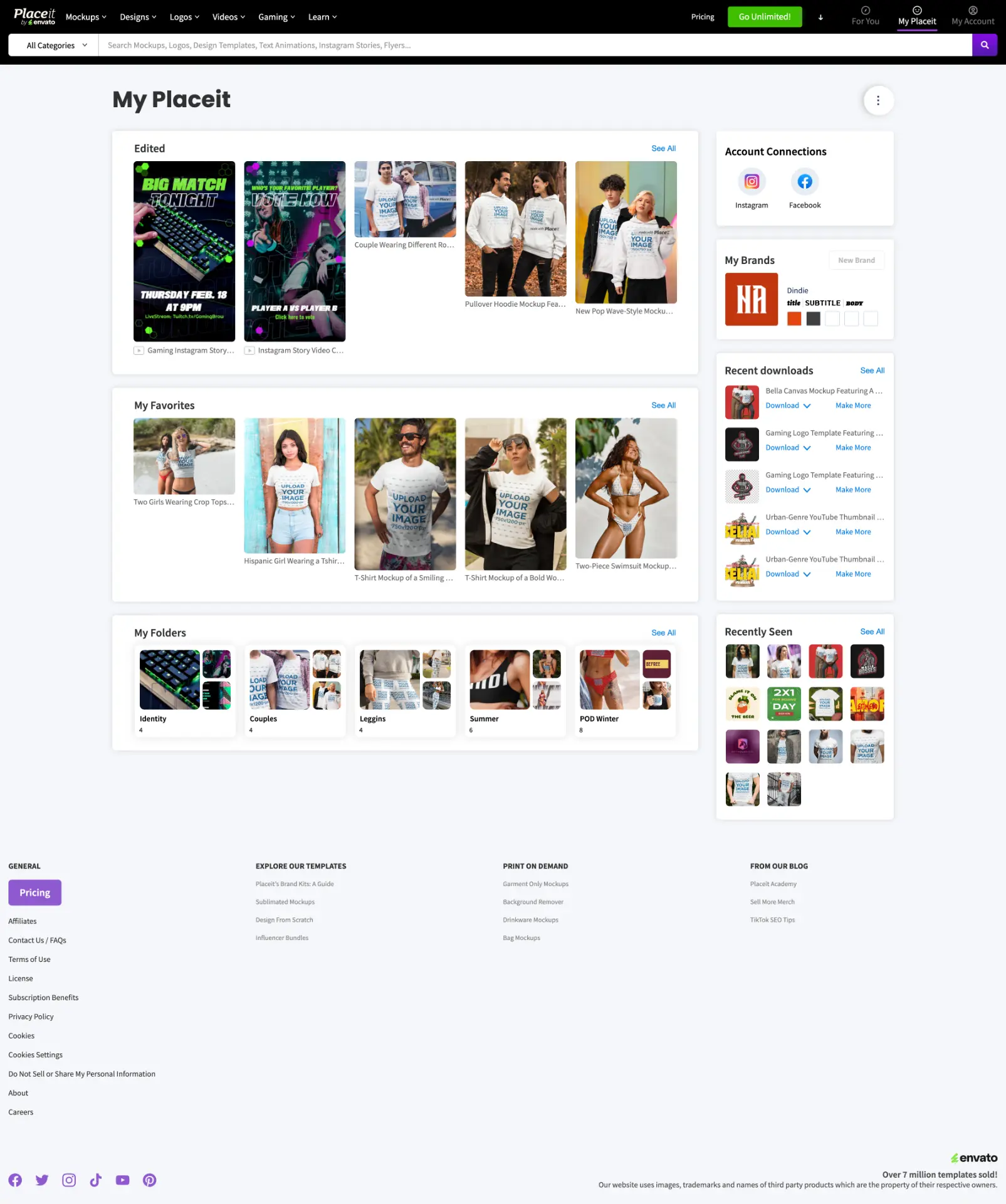
I built For You, a Placeit feed that adapted based on what someone actually consumed. Every template a user viewed, edited, saved, or downloaded added weight to its keywords, and that weight shaped what showed up for them next. The bigger change was underneath: I lowered how much publish date counted in ranking, and randomized the order among everything that scored as relevant.
A hundred or two hundred templates might all count as a good match, and instead of showing the same top handful in the same fixed order every time, For You varied the order among them. Older templates had been losing by default just for being older and for sitting lower in a fixed order. Once relevance mattered more than recency, and the display order stopped being fixed, that older catalog finally had a real path back to the surface. This shipped in For You, not in search.
The result.
The complaint stopped showing up in surveys the way it had before. Content that had been sitting untouched for months started surfacing again, not because we'd added anything new, but because relevance finally outweighed recency in deciding what people saw.
- 01If people say there isn't enough content, check whether you actually have it before you build more.
- 02If older content keeps losing to newer content by default, check how much weight recency is getting.
- 03Among results that are all roughly equally relevant, don't let a fixed order quietly bury half of them forever.
 Placeit