The importance of making our users feel in control.
How removing a date filter backfired.
- Search
- Data-Informed Design
- User Perception
The problem.
- What I found
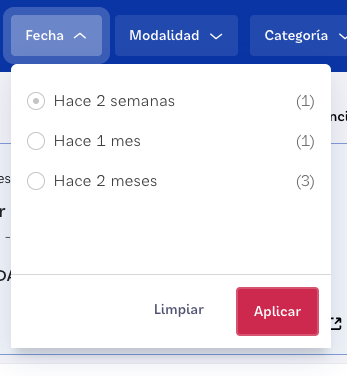
This came out of a broader cleanup of OCC's search results page, which had piled up far more filters than anyone could justify over the years. Part of the point of that project was to let people search in a simpler way, and cutting filters that didn't earn their place was central to it. One of them was a date filter with three options, today, this week, this month. People clicked it regularly.
What I found.
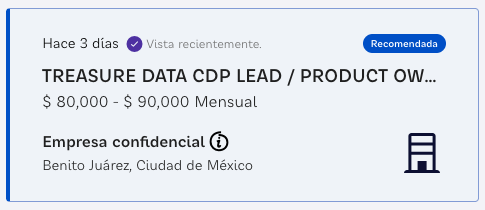
The filter worked. Choosing today showed only the jobs published that day; this week and this month limited the list the same way. But results were already sorted from newest to oldest and every card showed its date, so the filter didn't change the first jobs anyone saw. It excluded older ones and decided where the list ended. The team considered it expendable: recent jobs already came first, and applying to yesterday's job was still useful. That underestimated the value of limiting the results.
The bet.
- The result
I removed it, along with the rest of the filters that didn't seem to earn their place in that same cleanup.
The result.
No funnel metric moved in the wrong direction, though that number is soft, this shipped alongside several other changes to the same page, so pinning the platform impact on this one filter alone wouldn't have meant much either way. What I hadn't been watching for showed up somewhere else: Hotjar's on-site surveys kept catching the same complaint about the missing filter, and it kept surfacing on Twitter too. I ignored it for a couple of months, the way you ignore a small recurring complaint the data says shouldn't matter. It didn't stop. At one point someone tweeted that whoever decided to kill that filter should be fired, which is still one of my favorite insults anyone's ever aimed at me in public. Eventually the volume made the point better than any dashboard could, so I restored the original options and behaviour, and the complaints stopped. My own reading in hindsight is a kind of illusion of control: people valued deciding what was left out, more than the sorting suggested they should.
- 01Sorting and filtering are not the same thing: people value deciding what is left out.
- 02Cutting a control people use can read as taking something away, even when the default order looks sufficient.
- 03If you cut something that tested as redundant, watch the qualitative channels, session recordings, support tickets, social mentions, for a few months afterward.
- 04Being right on the data doesn't mean you get to ignore a complaint forever.
 OCC Mundial